







Overprovisioning is the default
Compute, databases, and Kubernetes requests get sized for a peak that rarely comes, then never revisited. Without governance at the point of provisioning, every new workload starts oversized and stays that way.
Agentic Cloud Optimization
Jetscale continuously scans your AWS, Azure, and GCP accounts, pre-verifies every fix, down to Spot eviction risk, and ships PR-ready Terraform your team reviews and merges. You pay only when the savings land.
Read-only access Terraform-native $0 until savings land
Trusted by engineering and platform teams at
Savings calculator
The problem
Teams have more cost visibility than ever: dashboards, tagging, anomaly alerts, savings decks. Yet 40% of the average cloud budget is waste, and cloud is now the second-largest line item on the corporate P&L, right after salaries. Most of that spend is going to resources nobody is using, because seeing a cost has never been the same as shipping the fix.
Compute, databases, and Kubernetes requests get sized for a peak that rarely comes, then never revisited. Without governance at the point of provisioning, every new workload starts oversized and stays that way.
Dev environments on weekends, unattached storage, endpoints nobody remembers deploying. It stays invisible because utilization data never reaches the person who owns the resource, and without that data, idle looks identical to essential.
Token bills are growing faster than any other line item: no per-team attribution, models overqualified for the task, context windows padded by default. Spend that moves this fast outruns quarterly reviews; it needs resolution in days.
Breaking the cycle takes all three, in order: governance that catches waste the moment it appears → cost data in front of the owner who can actually act → resolution shipped in days, not quarters. That's the loop Jetscale runs.
The drift problem
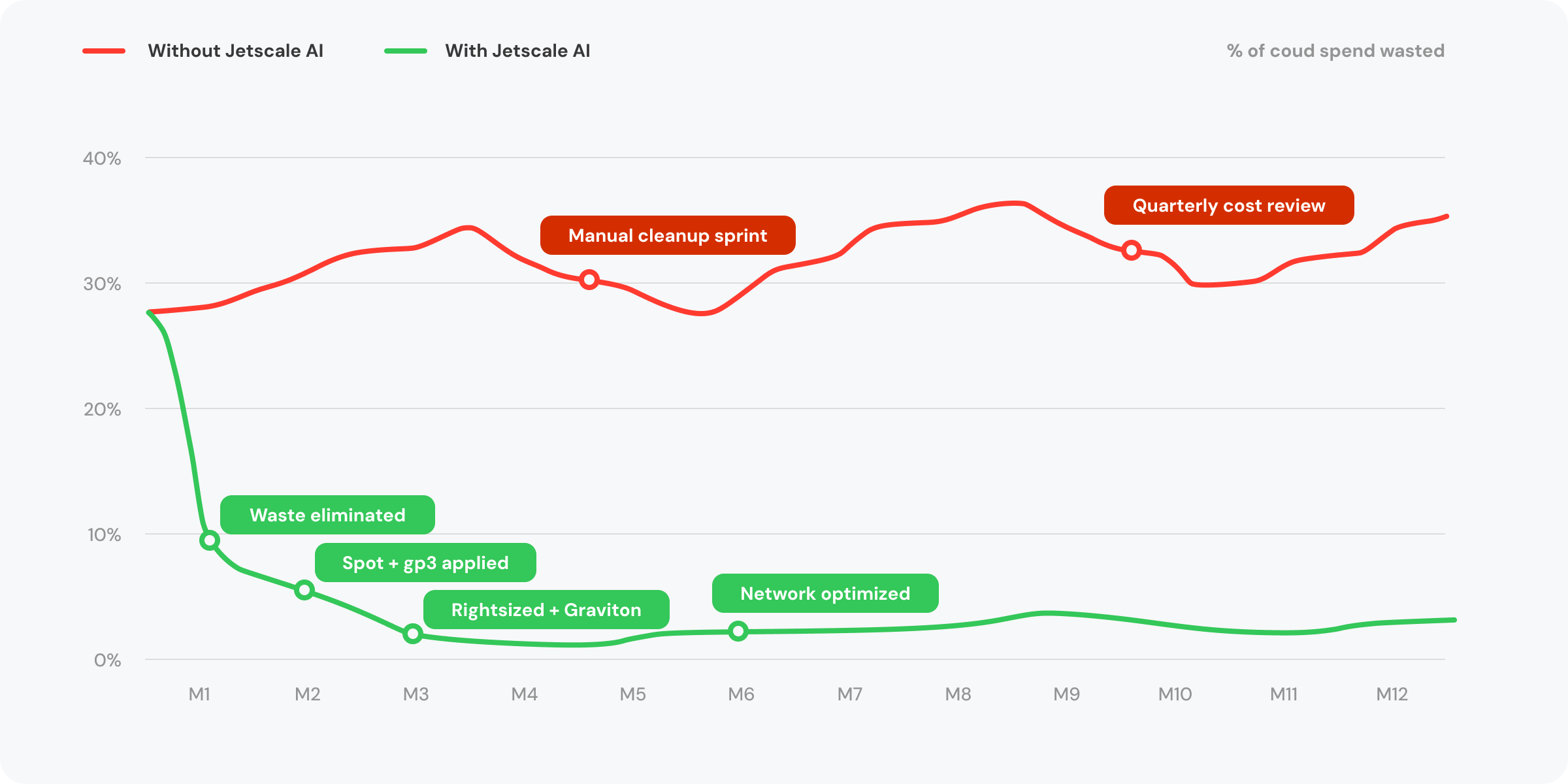
Point-in-time cleanups reset the meter. They don't stop it. New workloads launch oversized, defaults regress, environments outlive their purpose. Waste is continuous, so the fix has to be too.
New workloads launch oversized. Storage lands on legacy tiers by default. Test environments outlive their purpose. Manual cleanups only reset the clock.
By month 12, drift reaches 33% of total spend. On $100K/month, that's $33K a month ($396K a year) gone to entropy.
Jetscale doesn't optimize once. It monitors for drift, flags policy violations, and generates fresh Terraform-ready remediations as your infrastructure evolves.
How it works
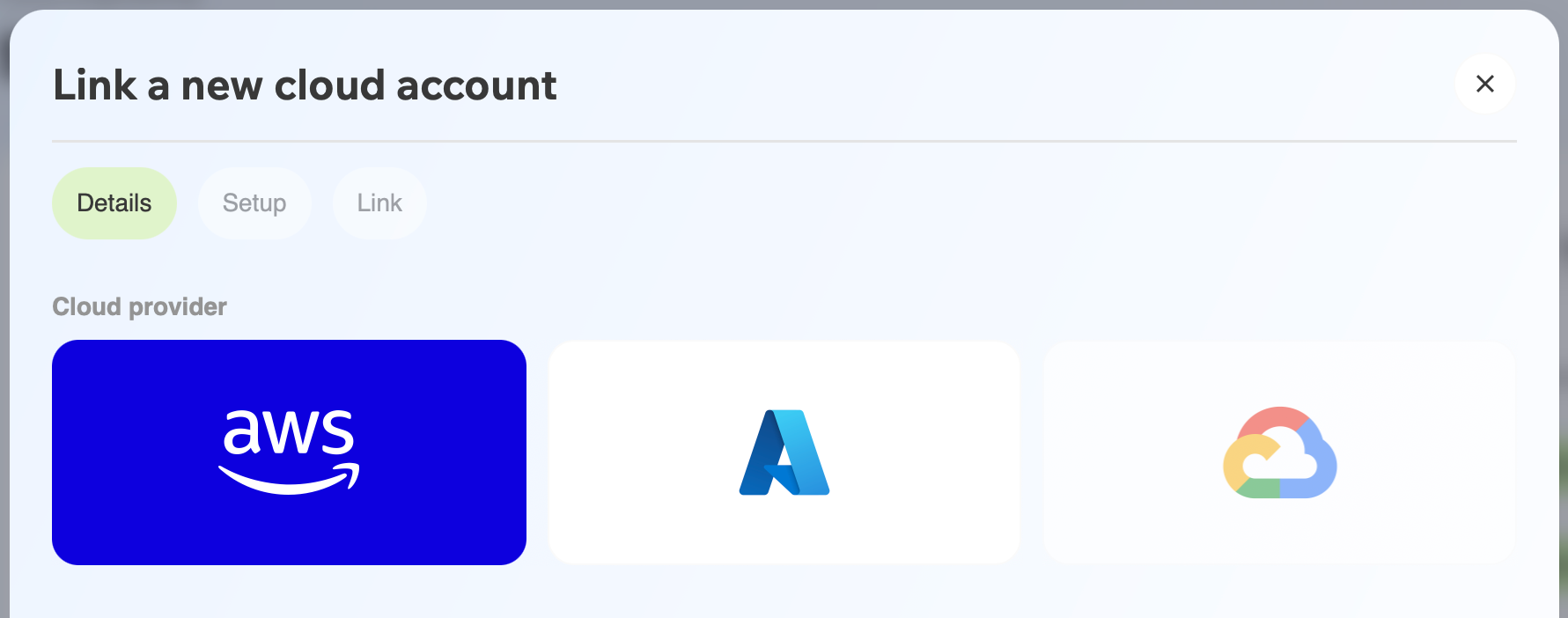
Plug in your AWS, Azure, and GCP accounts with read-only access. Jetscale never writes to your cloud. Nothing changes without your team's review.
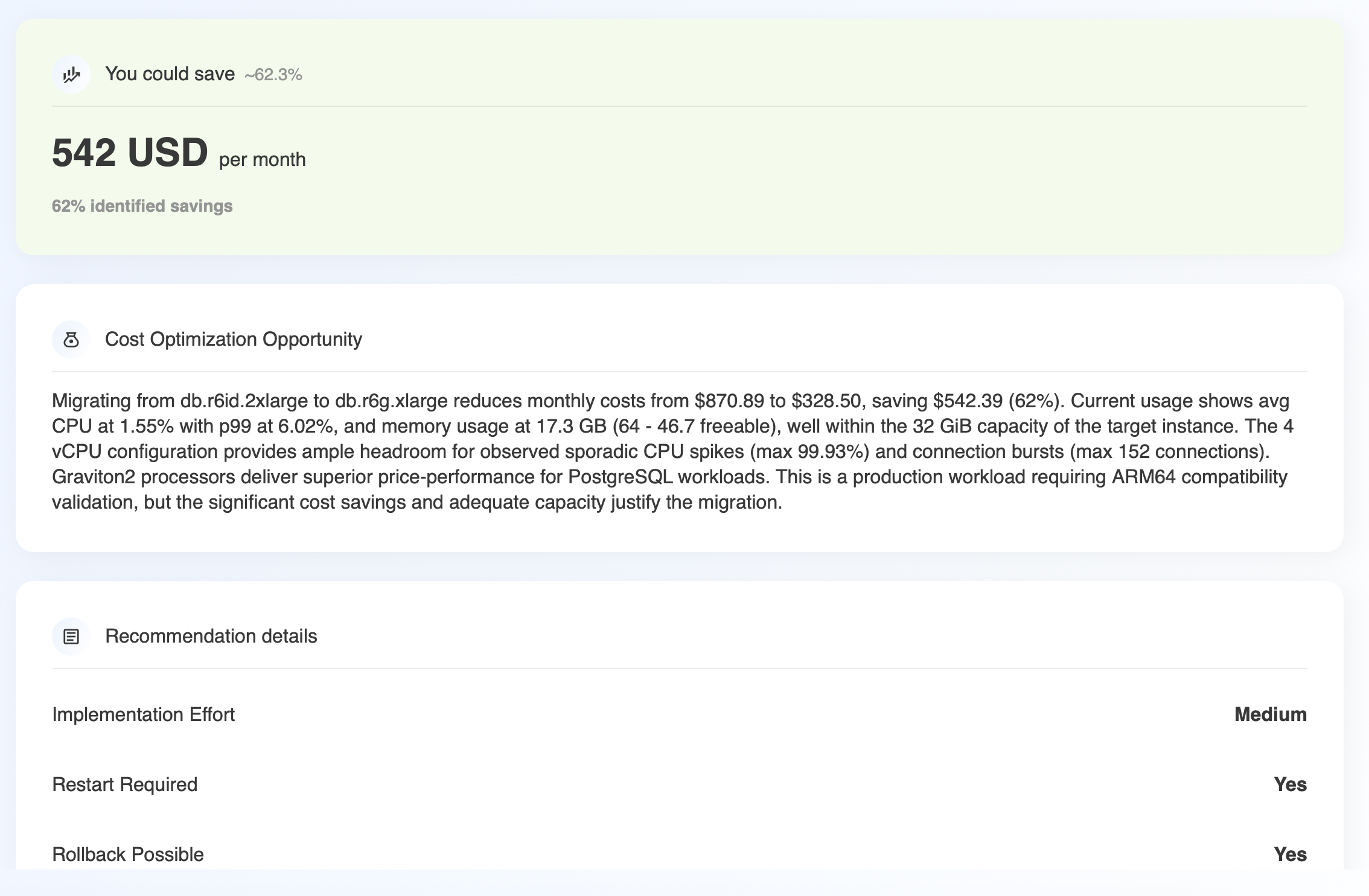
The Analyzer Agent scans your footprint and ranks every opportunity with evidence: telemetry, configuration data, and business context. Findings, not hunches.
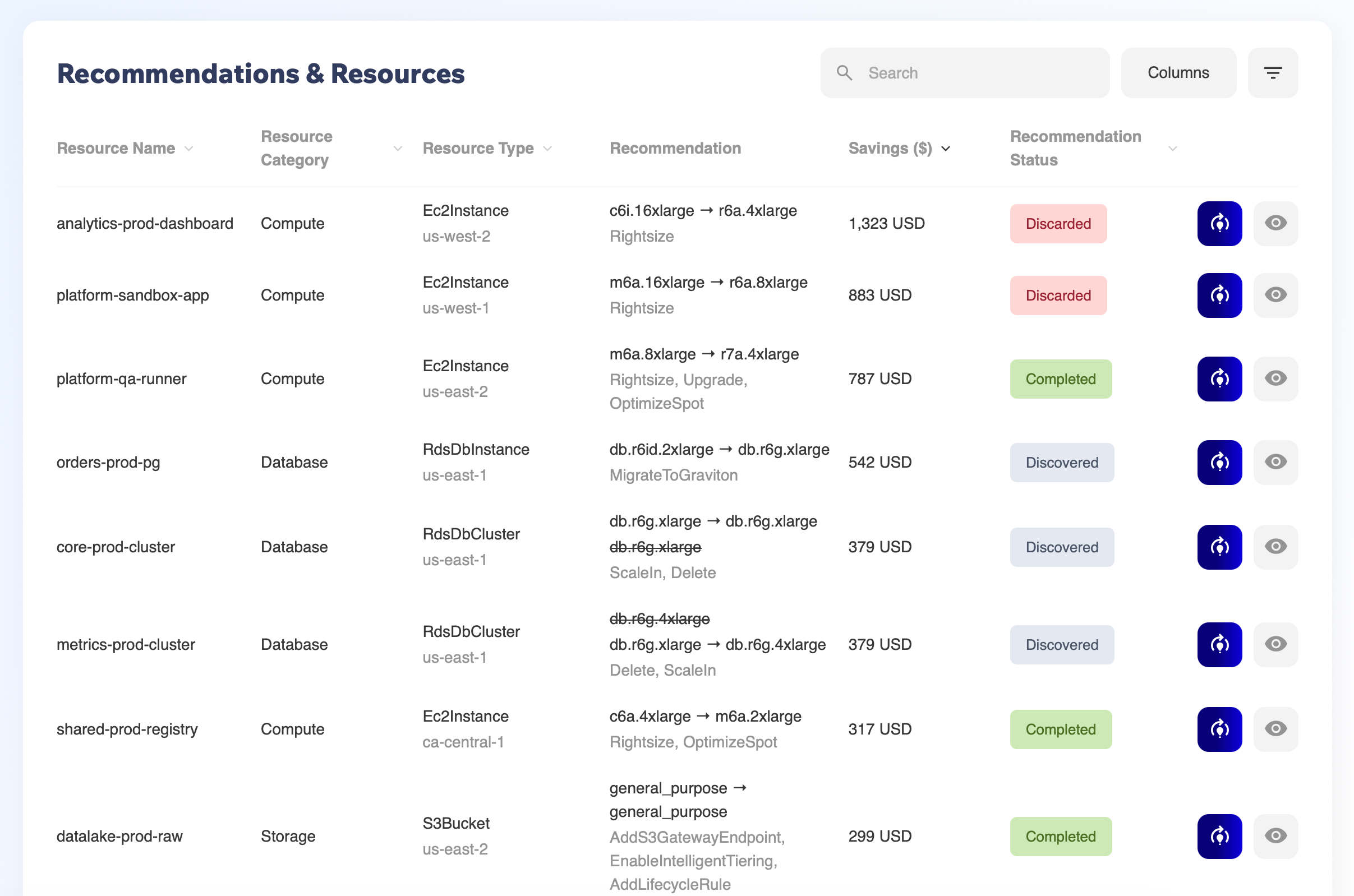
Each finding becomes a structured plan (what changes, expected impact, safest rollout path) delivered as a PR-ready Terraform diff or a guided ClickOps runbook with exact console URLs. Review, merge, deploy. Like any other change.
See it in action
From read-only connection to a merged Terraform fix and a verified line on your bill, watch Jetscale run the loop end to end.
Platform
Built for the agentic era, and fully transparent about it. Jetscale's agents show their work: every finding carries the evidence behind it, the math on the savings, and the exact change that fixes it. You can audit every step the agent took. No black boxes, no mystery savings.
The Analyzer Agent doesn't audit once. It monitors for drift, flags policy violations, and generates fresh remediations as your infrastructure evolves. Every recommendation is validated by telemetry, configuration data, and business context. Cluster right-sizing, S3 tiering to Glacier, VPC endpoint gaps, outdated machine types, dev databases running 24/7. Found automatically, ranked by impact.
Every opportunity ships as a PR-ready Terraform diff, reviewed, versioned, and rolled out like software, with a full audit trail. Prefer the console? Get a guided ClickOps runbook with the exact URLs and steps. Either way, the fix lands in your workflow, not in another dashboard.
OptimizeSpot simulates eviction risk against your actual workloads before recommending an On-Demand-to-Spot move. If it isn't safe, it isn't recommended. Spot savings you can bank, not gamble.
Pre-verified savingsJetscale never writes to your cloud. Plans are policy-aligned, changes go through your Git review, and your engineers hold the merge button. Savings are confirmed against your actual bill, and that's the only moment you're charged. Engineers keep control. Finance gets receipts.
Verified against your billSavings proof
of total spend lost to drift by month 12 without continuous optimization
recovered continuously on a $100K/mo cloud bill
what you pay before verified savings land
Drift figures from Jetscale's compounding-waste model; see Cloud waste for the breakdown.
Integrations
Jetscale reads the cloud accounts you already have and writes back through the tools your engineers already use. No proprietary IaC, no new dashboard to babysit.
Proof
Kubernetes nodes and pod requests re-tuned to actual utilization, shipped as a reviewable Terraform diff.
Pre-verified by OptimizeSpot: eviction risk simulated against the real workload before the move was recommended.
Cold objects moved to the right storage class with lifecycle policies your team merged like any other change.
Pricing
Pick the model that fits how your team buys software.
A flat platform fee, plus a share of the savings, only once a recommendation is completed and verified. Every plan includes a free annual allowance that's 100% yours before any performance fee applies.
Get a demoOne predictable number, sized to your cloud footprint and agreed upfront. No performance component, no variable billing, simple to budget for.
Talk to salesComparison
A feature-by-feature look at Jetscale AI next to other cloud cost optimization platforms.
| Feature | Jetscale AI | Sedai | PointFive | Adaptive6 |
|---|---|---|---|---|
| Multi-cloud support (AWS, Azure, GCP) | ||||
| Automated cost & waste recommendations | ||||
| Fixes delivered as ready-to-merge pull requests | ||||
| Conversational AI assistant | Not included | |||
| Recommendation lifecycle tracking | Not included | Not included | Not included | |
| Governance & security scorecards | Not included | Not included | Not included | |
| Free annual savings allowance | Not included | Not included | Not included | |
| Performance-based pricing | Not included | Not included | Not included |
Jetscale AI is the only platform here that only charges once a recommendation is completed and the savings are real: no completed fix, no fee.
FAQ
Jetscale doesn't stop at reporting. It turns opportunities into Terraform-ready remediation changes your team implements through normal engineering workflows.
No. Monitoring shows signals and incidents. Jetscale uses those signals (plus cost and configuration context) to generate optimization recommendations and fixes.
Common and uncommon sources of cloud waste: compute sizing, storage tiering, database configuration, network paths like missing VPC endpoints, each turned into a Terraform-ready remediation.
Every plan is pre-verified before it's recommended. OptimizeSpot simulates eviction risk against your actual workloads, and every fix ships as reviewable code with a structured plan, so your team validates scope and confirms impact after rollout. No blind changes.
No. Jetscale is read-only in your cloud environment. It generates reviewable, fix-ready IaC your team merges and deploys through your existing workflow.
Outcome-based. Savings are verified against your actual bill, and you're only charged when they land. No savings, no invoice.
Get started
Read-only connection. Evidence-backed findings. PR-ready fixes. Invoiced only when savings land.